
Where should a porta potty go on a job site or event lot?
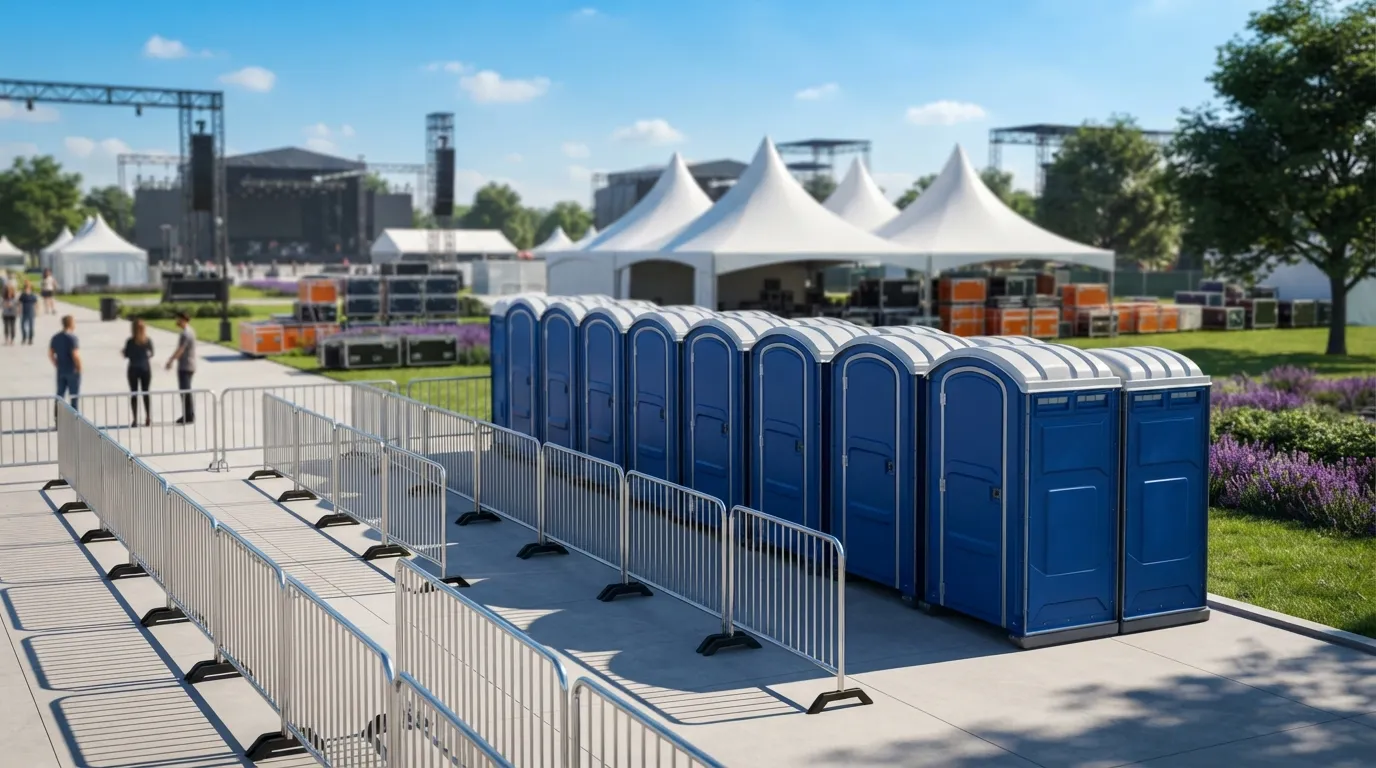
Pick flat, stable ground first. ADA Standards section 302.1 calls for surfaces that are stable, firm and slip resistant, and that rule applies whether you're setting a standard porta potty rental on a gravel pad in The Woodlands or a cluster of units for a weekend festival. Keep the unit within reach of a pump truck hose, and leave the service door facing the access lane, not a fence line. On construction sites, OSHA 1926.51(c)(1) sets the count you need before you even think about spacing: 1 toilet for 20 workers or fewer, more as the crew grows. That number drives how many spots you need to plan for, and it's worth checking with our porta potty rental checklist before delivery day. If you're placing near a building entrance for an event, ADA Standards section 213.2 requires that at least 5 percent of a cluster be accessible units, never fewer than one, so plan an ADA accessible porta potty into the layout from the start, not as an afterthought.
What are the porta potty placement rules near property lines and structures?
Keep units off drainage grates, away from open flame sources, and clear of doors that swing outward. A standard unit runs about 44 by 48 inches on the ground and stands roughly 92 inches tall, so measure the pad before delivery, especially under carports or low awnings common around The Woodlands. If you're renting a restroom trailer rental instead, ADA Standards section 404.2.3 sets a 32 inch minimum clear door opening, and section 403.5.1 calls for a 36 inch clear route to reach it, so the approach path matters as much as the pad itself. Placement in the public right of way is a separate question, and it needs confirming with the city before delivery, not guessed at. The same logic applies to a roll-off dumpster rental: dumpster placement permit cost and whether a dumpster placement permit is even required depends on whether the container sits on private pad or spills onto a street or sidewalk. Our dumpster permit requirements page walks through what to check before the truck shows up, and a roll-off delivery needs about 60 feet of straight clearance behind the truck to set down safely.
Why does ground clearance matter for delivery trucks?
Because the truck can't back into a spot it can't reach. That 60 foot clearance figure applies to dumpsters and it's a good rule of thumb for a restroom trailer rental too, since trailers need room to unhook and level. Overhead lines matter as well: OSHA 1926.404(b)(1)(ii) covers GFCI protection on temporary power, relevant if you're also running a temporary power pole or light tower rental near the same pad. Tight urban lots in The Woodlands sometimes force a compromise between the ideal spot and the only spot a truck can reach, and that's a conversation worth having with dispatch before delivery day, not after the truck is already stuck. If a storage container or mobile office trailer rental is sharing the same lot, give each delivery its own lane; a broken mobile office trailer replacement doors situation is a slow, expensive fix compared to planning clearance up front. For septic access, the same clearance math applies: a residential tank is typically pumped every 3 to 5 years, and the truck needs a clear path to the riser just like a placerville septic pumping service crew would expect on any tank, anywhere.
Where should handwashing stations and fencing go relative to the toilets?
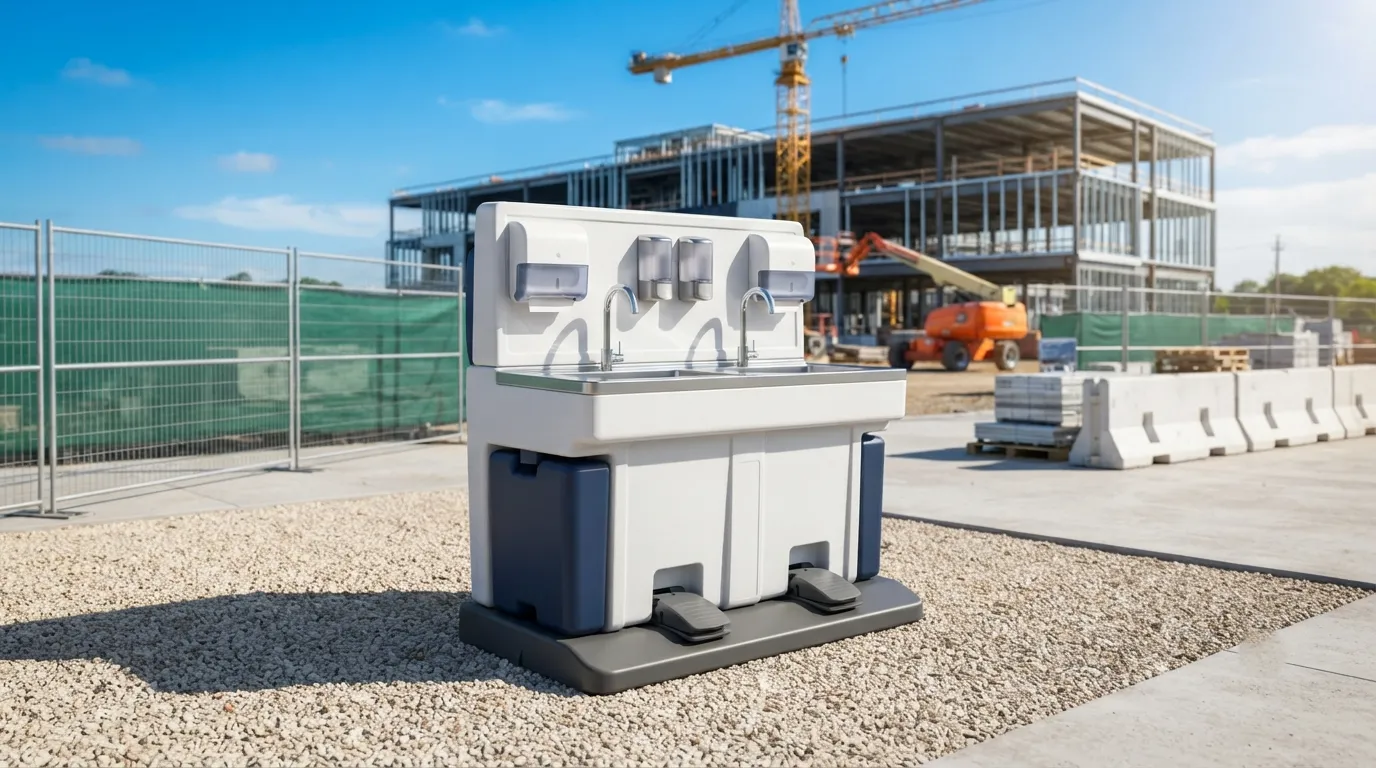
Right next to the toilets, always. 29 CFR 1910.141(d)(2) requires soap and towels or a hand-drying device at wash stations, not sanitizer alone, so a handwashing station rental belongs at the exit path of every restroom cluster, not off in a corner. If work involves paints, coatings, herbicides or insecticides, OSHA 1926.51(f)(1) requires washing facilities for that specific exposure, so a portable sink rental near the paint or chemical staging area is a compliance point, not a nice-to-have. For crowd events, run temporary fence rental or a chain link temporary fence around the whole restroom bank to control flow and keep sightlines clean; barricades used for worker protection should meet ANSI D6.1 per OSHA 1926.202. If a wash station needs an ozark river portable sink replacement parts swap, mid-event, keep a spare basin or pump on hand rather than pulling the whole unit. Sites 11.6 miles southwest in Tomball and 14.5 miles southeast in Spring follow the same placement logic, since ground conditions and truck access matter more than zip code.
How many porta potties do I need for my site?
It depends on worker count and duration. OSHA 1926.51(c)(1) sets 1 toilet per 20 workers on construction sites, scaling up at 40 and 200. Events run differently; check our how many porta potties do I need guide for headcount-based ratios before you order.
Do porta potties need a permit to place in The Woodlands?
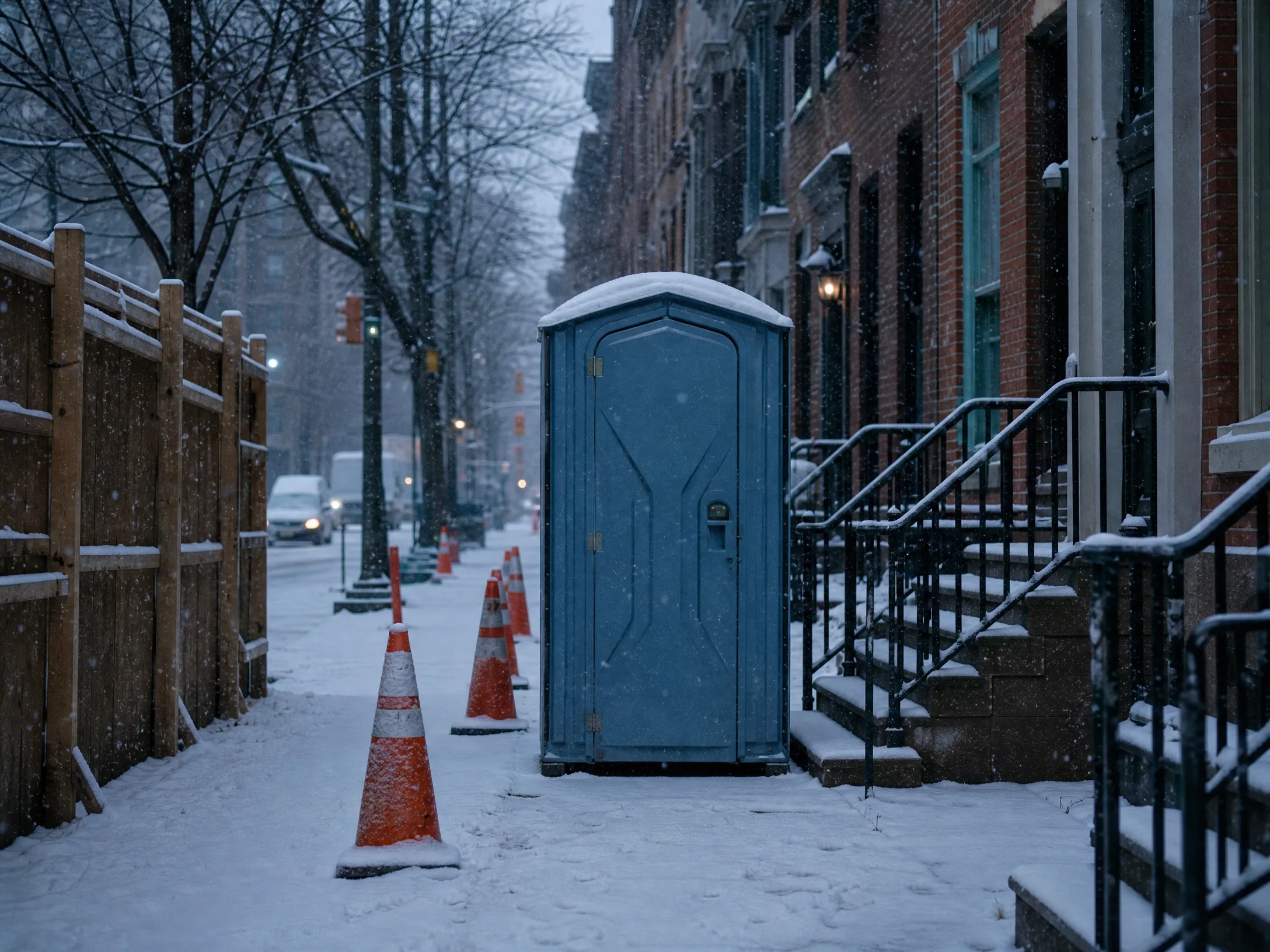
Right-of-way placement needs confirming with the city; it's not something to guess at. Private lot placement usually doesn't need one. See porta potty permit requirements for what to ask before delivery.
Can I place a porta potty on grass or gravel?
Yes, as long as the surface is stable and firm. ADA Standards section 302.1 sets that same bar for accessible units. Soft mud or a steep grade means a wood pad or a different spot.
How far should a handwashing station be from the toilets?
Close enough that workers actually use it, right at the exit path. ANSI/PSAI Z4.3 sets a baseline weekly service interval assuming steady use, so keep the station visible and near the flow of foot traffic.
What happens if a delivery truck can't reach the placement spot?
Dispatch will ask for an alternate spot with the required clearance. A roll-off needs about 60 feet behind the truck; trailers need similar room to unhook and level before use.
Next step
Get a delivery date
Tell us the address, the dates and the headcount. We size the order and confirm the route.